Review of "Complexity and Contradiction in Architecture"
I've been reading about architecture lately. I find it informative as intellectual perspective on design in general, and it has a much longer academic history than any other design discipline. UI design is young and informal, mostly pondered in blogs and tweets. Industrial design is only a ~century old. Architecture has a very old trail of academic literature, full of bold and lucid manifestos. This book is one of them.
I discovered Complexity and Contradiction in Architecture when reading Modern Architecture: a Critical History by Kenneth Frampton. In what is mostly a long-winded historical survey of modern architecture, Frampton takes a beat at the end to mention and quickly denigrate Robert Venturi's "Populist" architectural style. He writes:
The irony with which architects from Lutyens to Venturi have sought to transcend through wit the contradictory circumstances under which they are asked to build here seems to degenerate into total acquiescence; and the cult of 'the ugly and the ordinary' becomes indistinguishable from the environmental consequences of the market economy (p 291)
By scenographically simulating the profiles of classical and vernacular and thereby reducing the architectonics of construction to pure parody, Populism tends to undermine the society's capacity for continuing with a significant culture of built form. The consequence of this for the field as a whole has been a seductive but decisive drift towards a kind of 'tawdry pathos'… (p 293)
The criticism was so sharp and unexpected it made me laugh. Frampton clearly took offense to Venturi's philosophy and felt the need to address it, even if to merely write it off. It would've been easy to accept his verdict and move on, but I picked up a copy of Complexity and Contradiction to decide for myself.
Content
In this book, Robert Venturi describes his philosophy of architecture.
Architects can no longer afford to be intimidated by the puritanically moral language of orthodox Modern architecture. I like elements which are hybrid rather than "pure," compromising rather than "clean," distorted rather than "straightforward," ambiguous rather than "articulated," perverse as well as impersonal, boring as well as "interesting," conventional rather than "designed," accommodating rather than excluding, redundant rather than simple, vestigial as well as innovating, inconsistent and equivocal rather than direct and clear. I am for messy vitality over obvious unity. I include the non-sequitur and proclaim the duality. (p 16)
It was published in 1966 — at the height of modernism — so Venturi naturally spends a lot of time critiquing modernists like Sullivan, Wright, Mies, and Le Corbusier. His criticism is not all negative though — he unemotionally calls out ideas he likes and dislikes from each architect (some more than others). The entire book is rooted in historical examples from all eras.
A summary of Venturi's main points:
Ambiguity — architects should become comfortable with dual and contradictory meaning, and resist oversimplification. Complexity should not be pursued for its own sake, however. Venturi warns of a false complexity "unconnected with experience" (p 18). His stance is that each building is already rich with complexity of circumstances, problems, and uses, and architects should accommodate those tensions in their design, rather than conjuring up complexity haphazardly.
Praising Alvar Aalto's work, he writes, "Aalto's complexity is part of the program and structure of the whole rather than a device justified only by the desire for expression" (p. 18-19)
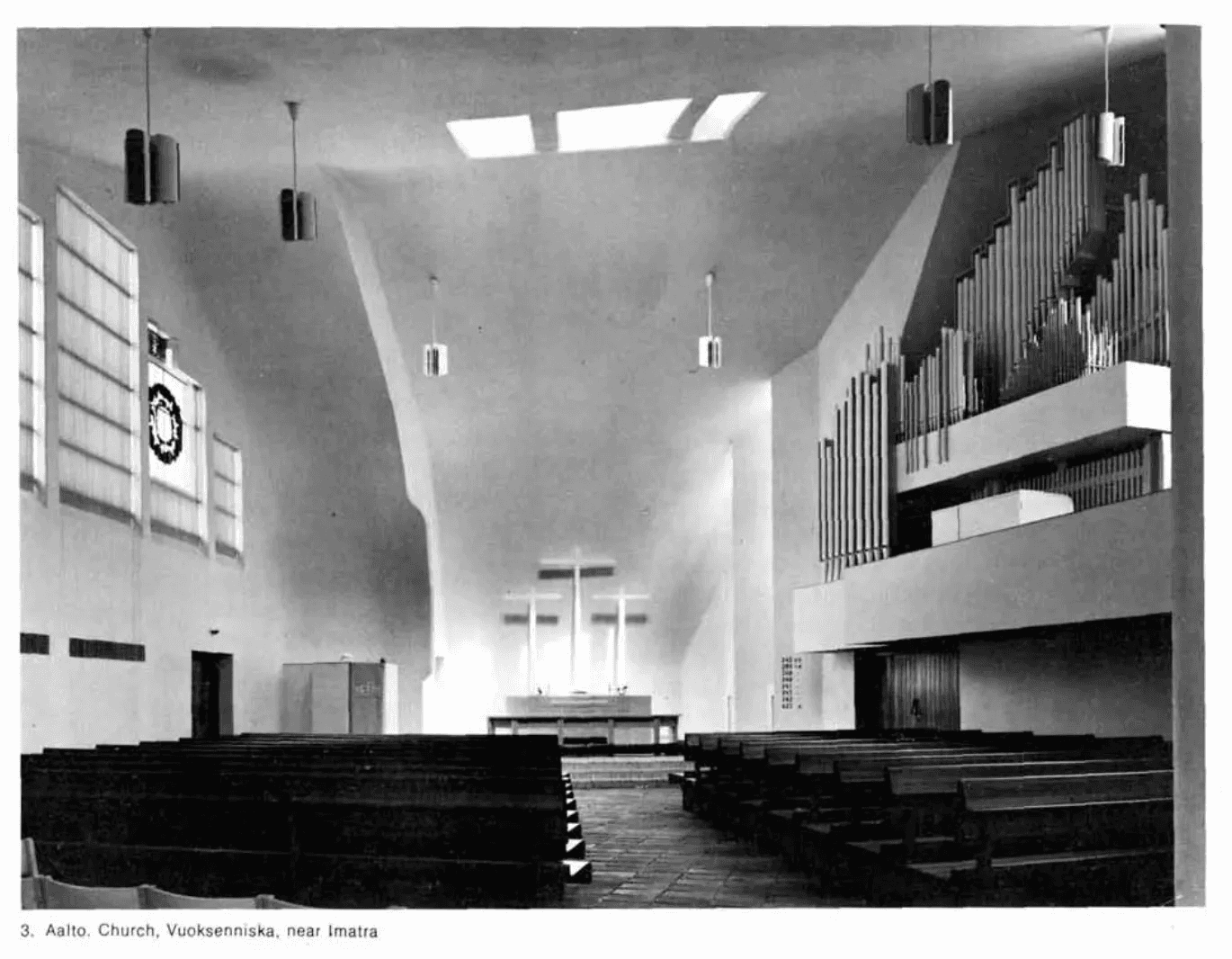
He describes several techniques to produce this kind of complexity:
I. The Double-Functioning Element — a material, component, room, or building itself, can accommodate many uses. He criticizes modernism's focus on "separation and specialization at all scales" (p 34).
In some Mannerist and Baroque masonry constriction the pier, pilaster, and relieving arch about evenly make up a facade, and the resultant structure, like that of the Palazzo Valmanna (48), is bearing wall and frame at once. (p 36)
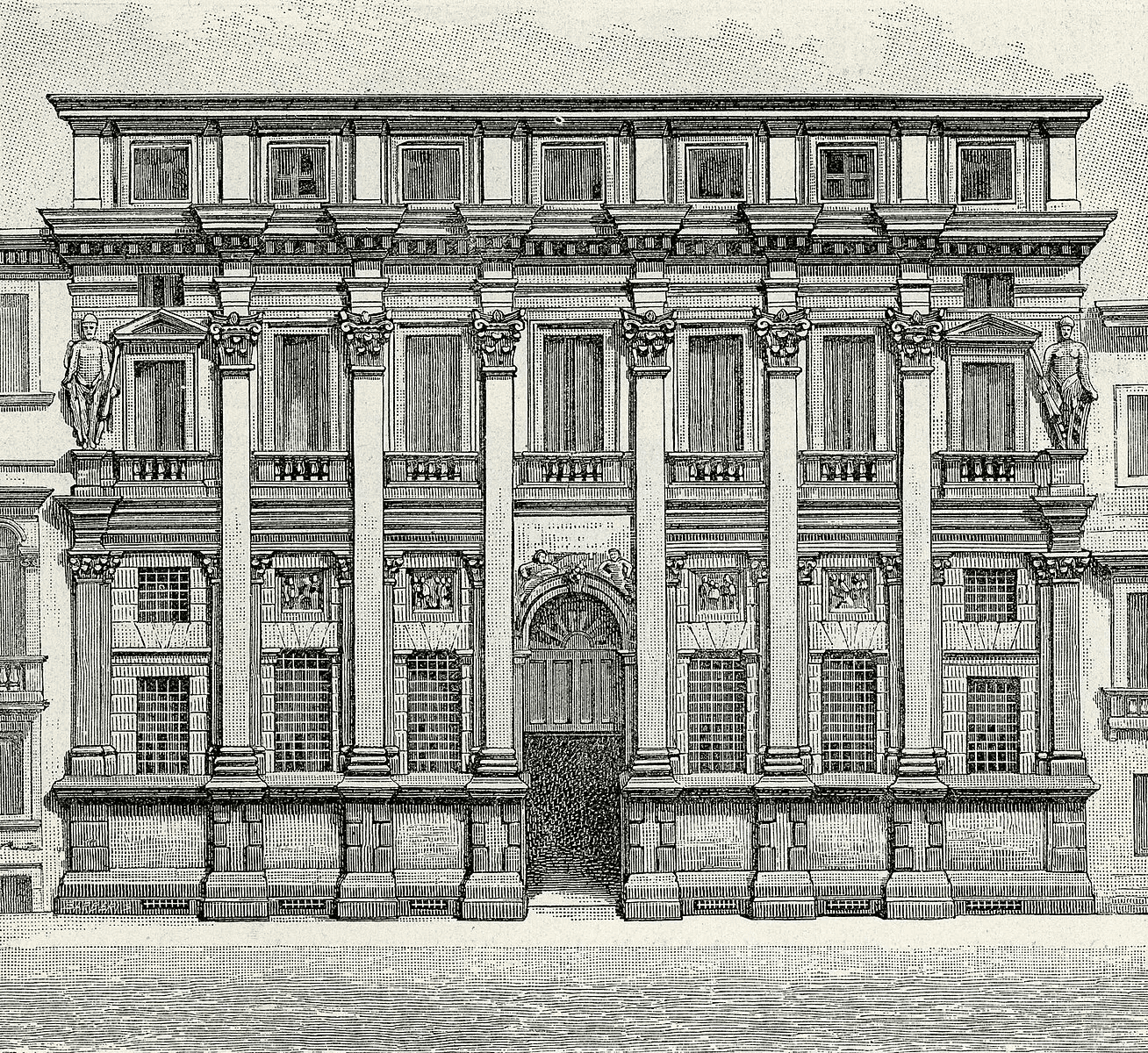
He also describes a "vestigial element", which he defines as "the result of[...]ambiguous combination of the old meaning, called up by associations, with a new meaning created by the modified or new function…" (p 38).
The paths of medieval fortification walls in European cities became boulevards in the nineteenth century; a section of Broadway is a piazza and a symbol rather than an artery to upper New York state. (p 40)
Venturi promotes rhetorical elements (such as ornament) as a way of enriching meaning.
II. Superadjacency — superimposing similar forms at different scales to create contrast.
Classical orders make for another kind of contrasting adjacency when the giant order is juxtaposed on the minor order and the proportion is constant regardless of size. Jefferson's combinations of column sizes at the University of Virginia (96) contradict the maxim that every magnitude requires its own structure (p 58).
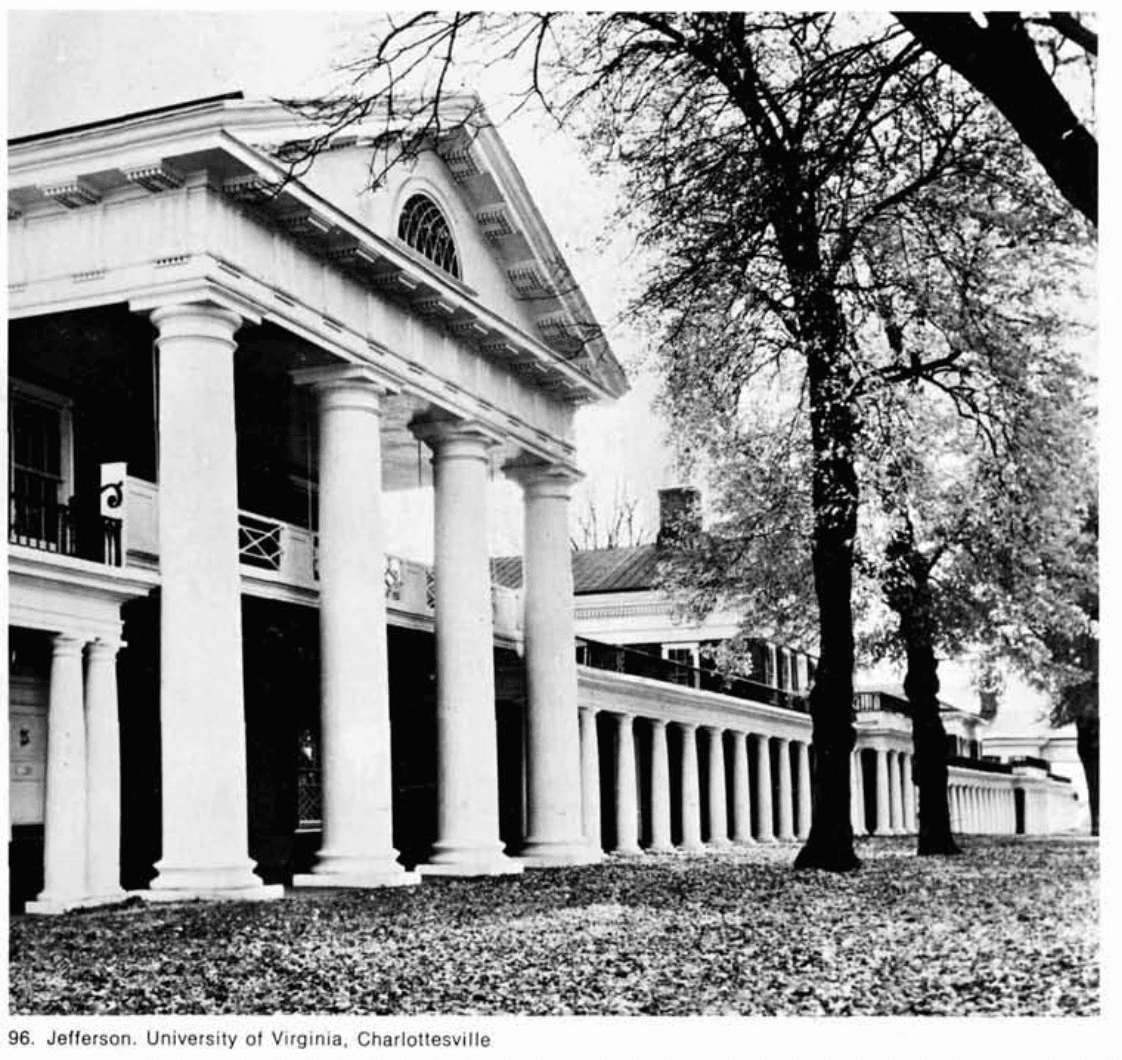
III. Separation of Spaces — whereas modernist architects became obsessed with flowing, open spaces ("indoor-outdoor living"), Venturi believes in contrast between spaces. "The inside is different from the outside" (p 70), he remarks. Modernists envision buildings growing from inside out, selfishly ignoring their environment. He uses Wright as a negative example:
for Wright the exterior and interior space of his invariably isolated buildings was continuous, and as he was an urbanophobe, the suburban environment of his buildings, when specifically regional, was not so particularly limiting spatially as an urban context. […] Wright however, I believe, refused to recognize the setting that was not sympathetic to the direct expression of the interior. The Guggenheim Museum is an anomaly on Fifth Avenue. But the Johnson Wax Building perhaps makes a negative gesture toward its indifferent urban environment by dominating and excluding it.
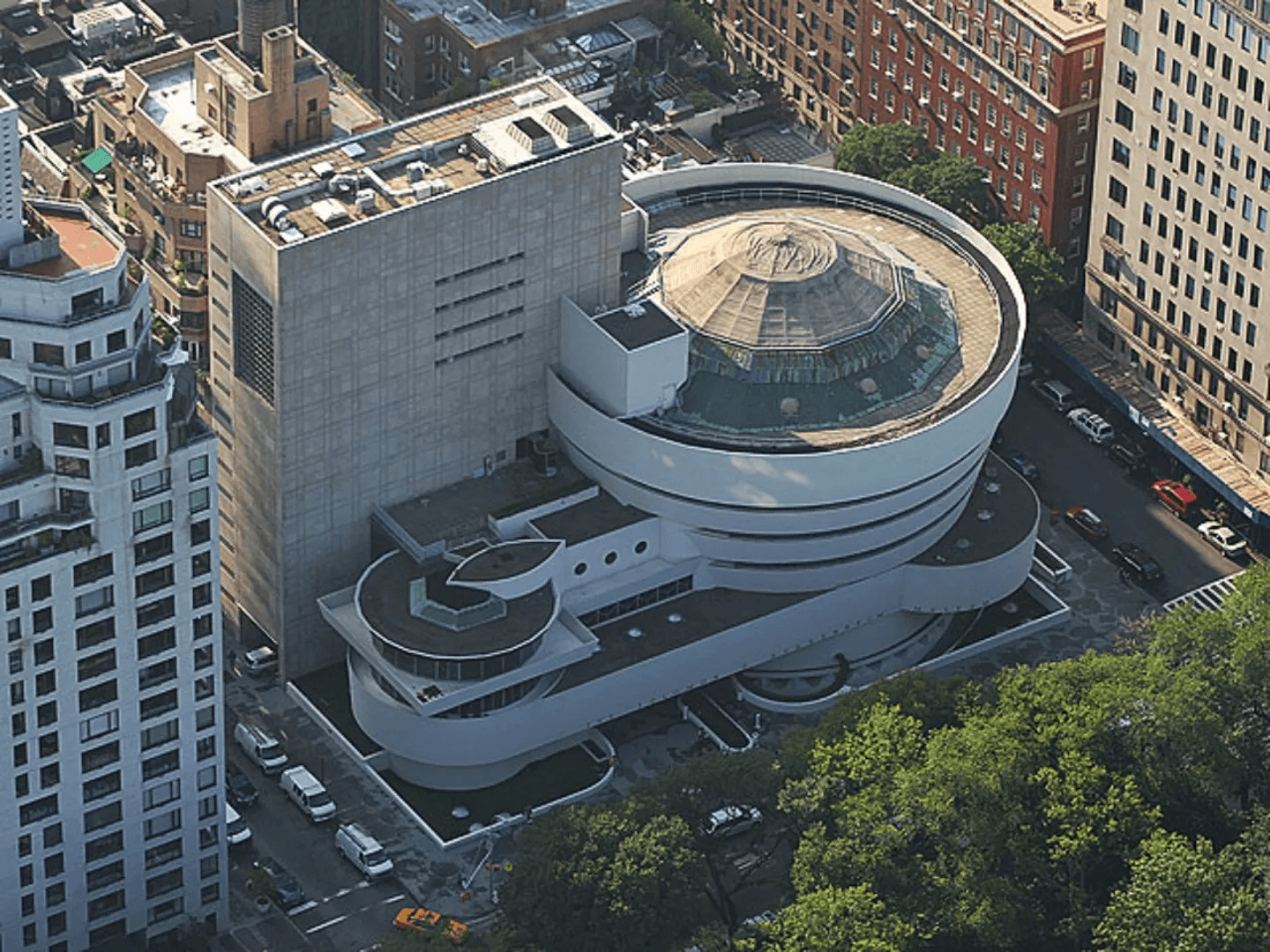
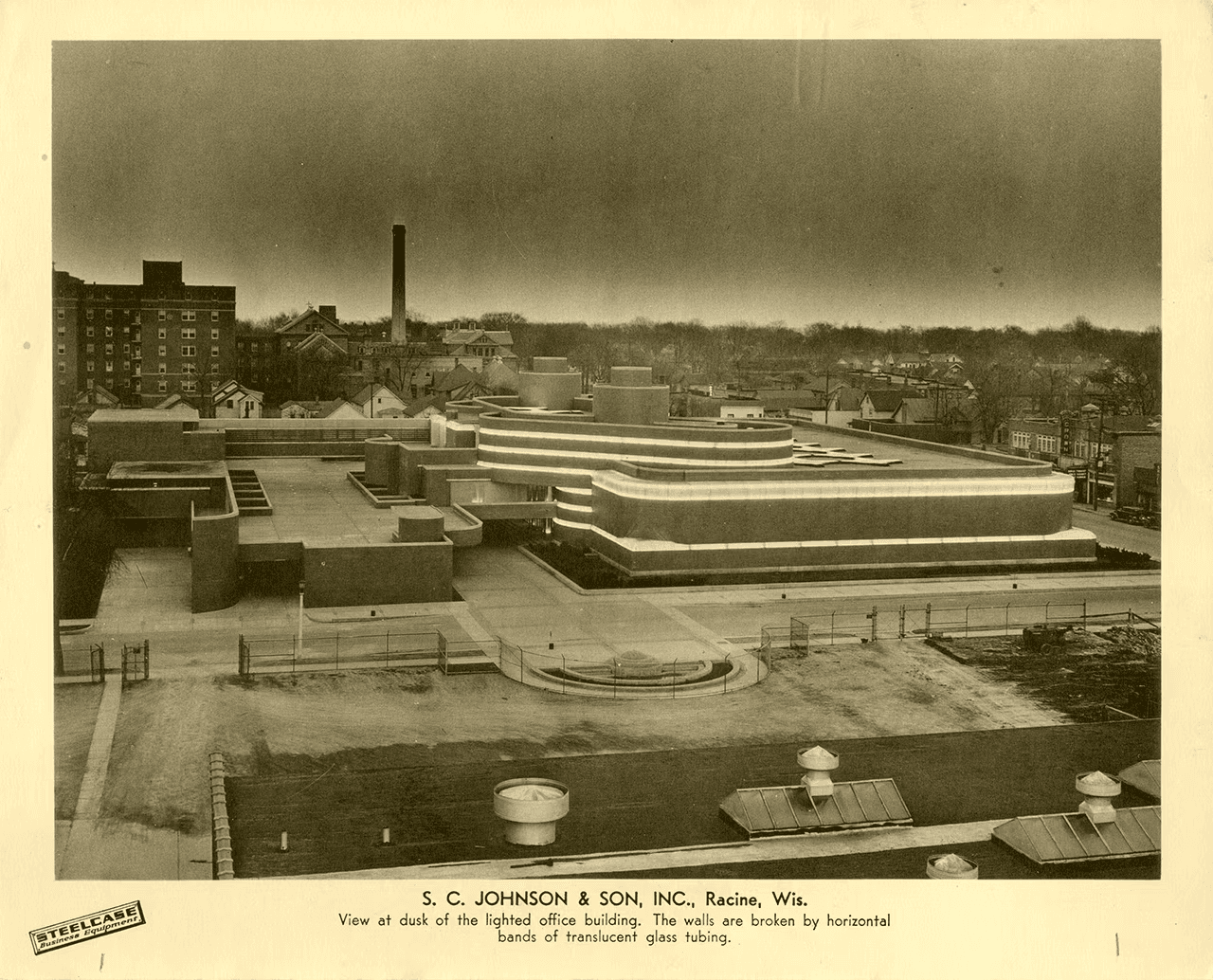
Separation allows buildings to accommodate tension between their interior and exterior.
Common Objects — architecture should accommodate mundane objects, even if they offend our sensibilities. "Our buildings must survive the cigarette machine" (p 42). He claims modern architects focus too much on new forms and technologies, ignoring what is already commonplace.
Wright, for instance, almost always employed unique elements and unique forms, which represented his personal and innovating approach to architecture. Minor elements, like hardware by Schlage or plumbing fixtures by Kohler of Kohler, which even Wright was unable to avoid using, read as unfortunate compromises within the particular order of his buildings, which is otherwise consistent. (p 43)
Conventional objects can also be used as expressive juxtaposition. He compares this to Pop Artists placing uncelebrated elements in new artistic contexts. "Banal" or "vulgar" elements can provide ironic relief to cutting-edge technology.
The architect who would accept his role as combiner of significant old cliches—valid banalities—in new contexts as his condition within a society that directs its best efforts, its big money, and its elegant technologies elsewhere, can ironically express in this indirect way a true concern for society's inverted scale of values. (p 44)
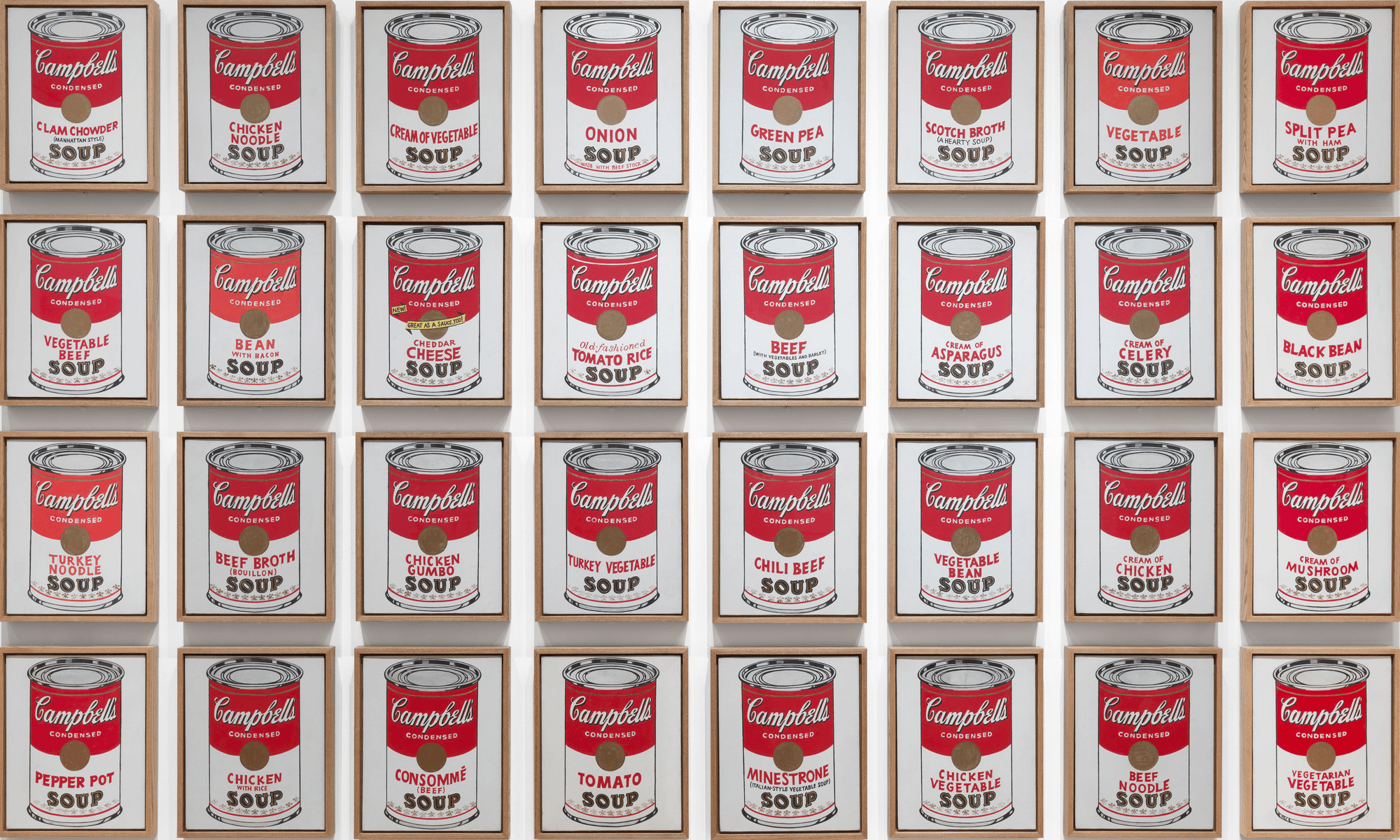
Adapting to the Environment — buildings must adapt to circumstances and external forces, instead of imposing false order. Adaptations may break perfect form and symmetry.
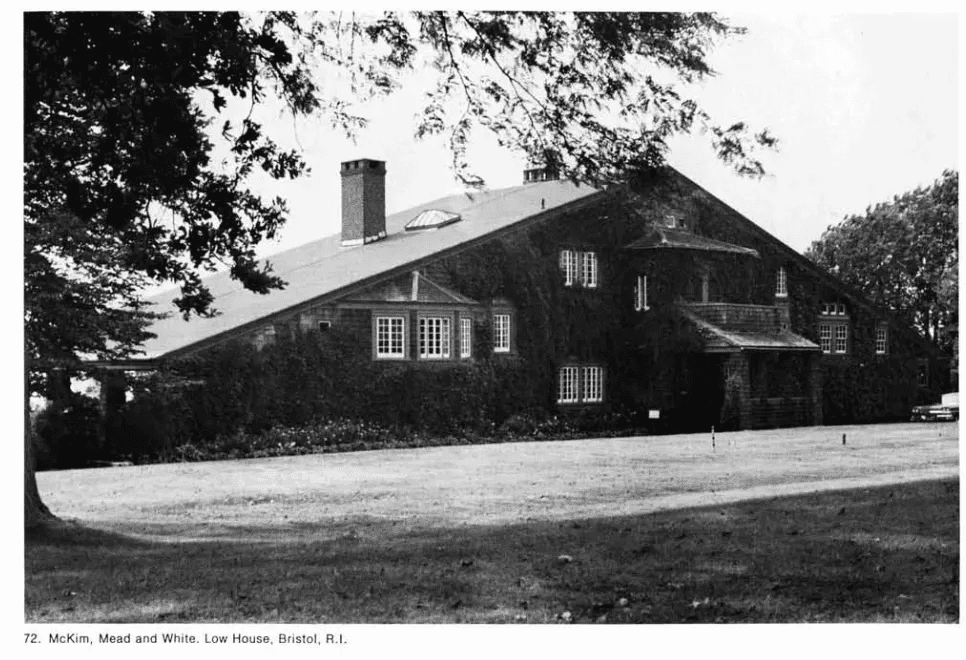
In McKim, Mead and White's Low House (72) the blatantly exceptional window positions in the north facade contradicted the consistent symmetrical order of the outside shape to admit the circumstantial complexities of its domestic program. (p 48)
Mies allows nothing to get in the way of the consistency of his order, of the point, line, and plane of his always complete pavilions. If Wright camouflages his circumstantial exceptions, Mies excludes them: less is more. (p 49)
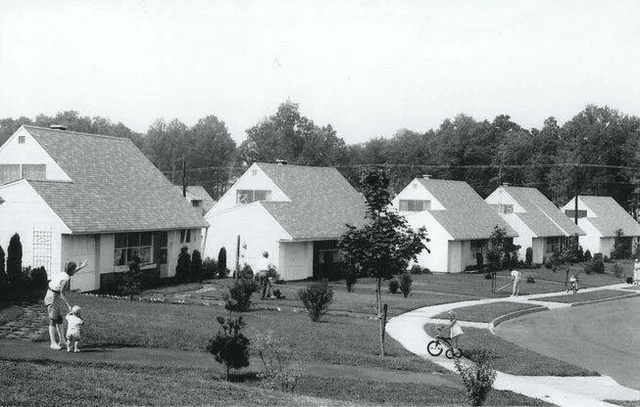
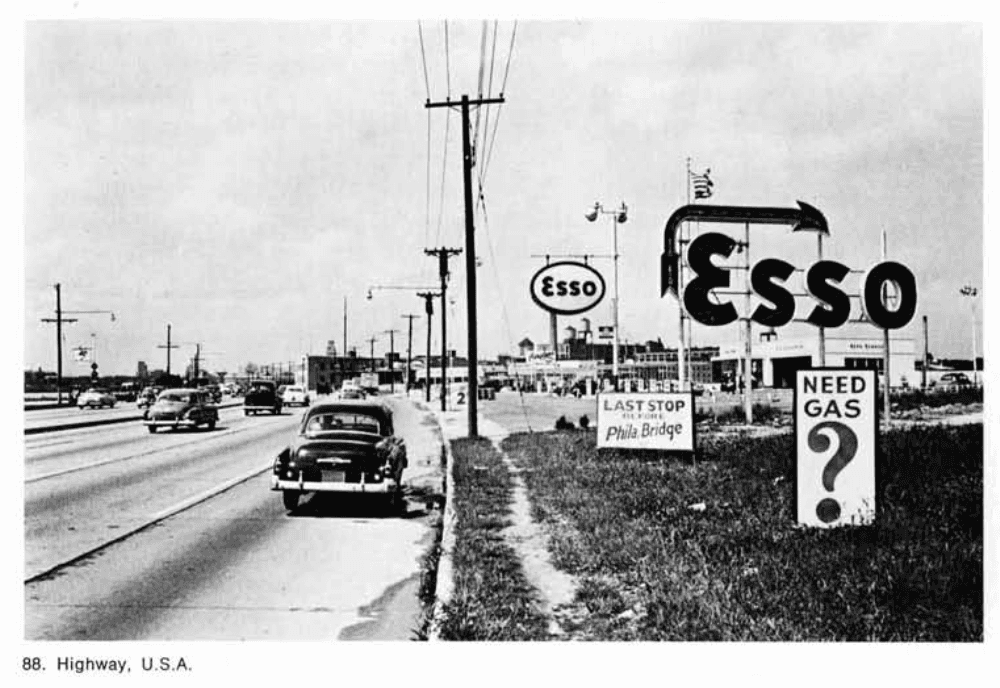
He also applies this principle to urban design. Cities evolve organically and inconsistently, yet are constrained by the city's geometry and zoning. Projects like Levittown impose false simplicity, which prevents real urban environments from growing. On the other end of the spectrum, cluttered, sprawling roadside architecture presents a false complexity because it is unconstrained.
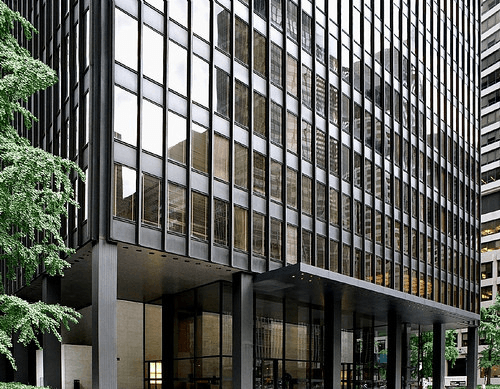
The Difficult Whole — although a building can have many conflicting features and motifs, it should always unite them. He sees simplification as a cheap way to achieve unity: "It is the difficult unity through inclusion rather than the the easy unity through exclusion" (p 88). Venturi describes "inflections" — fragments that hint toward the whole, and "dominant binders" — central elements which serve to resolve dualities.
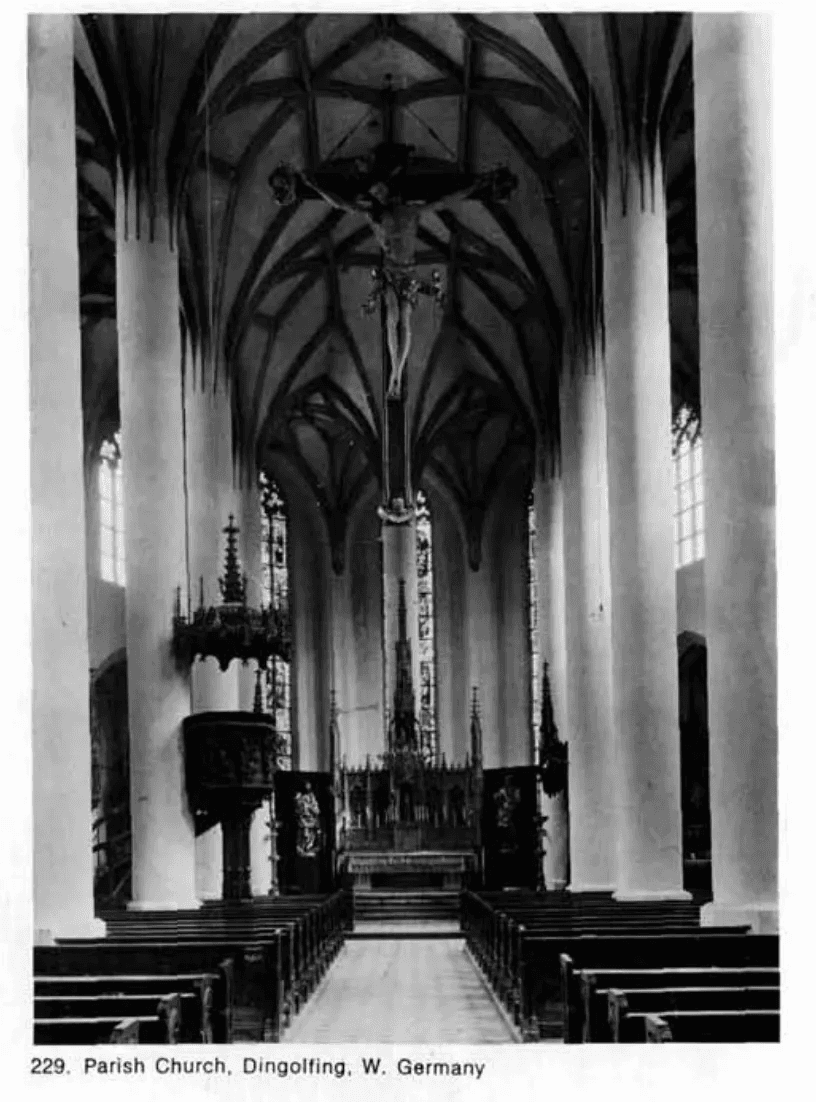
One column bisects the nave at the end of the Late Gothic parish church at Dingolfing (229), a hall-type church, but the juxtaposition of the central bay and window behind, which evolves from the complex vaulting above, resolve the original duality. (p 95-96)

I have to say I mostly agree with Venturi's points — it is what he omits and overemphasizes that I take issue with. I dislike false simplicity, I like his appreciation for mundane objects, I sympathize with adapting to external circumstances. His abstract ideas are hard for me to argue with.
My issue is Venturi treats architecture too artistically. He spends most of his words focusing on visual perspective, form and meaning, rather than on architecture as a functional medium. Maybe he understands this and feels no need to elaborate on it, instead focusing on his contrasts with modernism.
Venturi's philosophy makes for a poor mental model for design. If you start from a celebration of complexity, you are not discerning enough about what complexity is warranted, and how much is warranted before it devolves into chaos (even if he claims to be). If modernists made sins of omission, Venturi makes sins of commission. And if modernism is about being "as simple as possible, but no simpler", Venturi prefers "as complex as possible, but no more complex":
It is the unity which "maintains, but only just maintains, a control over the clashing elements which compose it. Chaos is very near; its nearness, but its avoidance, gives . . . force." (p 104)
This is a slippery slope.
I disagree that unity via inclusion is harder (or more worthwhile) than unity via exclusion. Tradeoffs are hard! I can empathize with the historical path-dependence of his reactionary stance, but his philosophy ended up driving him to a style that just doesn't work. Venturi would've been a better critic than architect.
I actually love his point about conventional elements — that these "un-chic" objects should not be abolished or concealed, but openly integrated into our designed environment. Objects borne out of mundane constraints often create aesthetics by accident; in the undesigned we find good design.
He has a particular preoccupation with honky-tonk commercial display elements, "which are positively banal or vulgar in themselves and are seldom associated with architecture" (p 42). He doesn't explicitly say why, but I imagine his fascination comes from the recent rise of interstate highways and roadside architecture at the time. Roadside signage represents the most unabashed expression of attention-grabbing design. It's as fanciful and blaring as possible, with no regard for aesthetic consistency (this is what he must have meant by "vulgar"). The chaos of dozens of competing neon advertisements makes for a unique spectacle. (Venturi writes more about this in his later work Learning from Las Vegas, which I haven't yet read.)
But he slides too far into indiscriminate appreciation for honky-tonk elements. This is the "tawdry pathos" that Frampton speaks about.
Pop Art has demonstrated that these commonplace elements are often the main source of the occasional variety and vitality of our cities, and that it is not their banality or vulgarity as elements which make for the banality or vulgarity of the whole scene, but rather their contextual relationships of space and scale. (p 44)
We can bring variety and vitality without devolving into cheap shouting. Not all pop products are good design, and we don't need to accommodate them wholesale because "they are what we have". Recontextualization doesn't automatically cleanse a vulgar object of its ugliness; including it for some ironic statement isn't interesting or useful.
Venturi's blindspots manifest in his work, which I…dislike. Disregarding any detailed critique — I don't have the architectural vocabulary and knowledge to make one — I just don't like the way it looks. All his expounding on the demerits of modernism, and this is his answer? It reminds me of the quote from No Country for Old Men — "If the rule you followed brought you to this, of what use was the rule?"
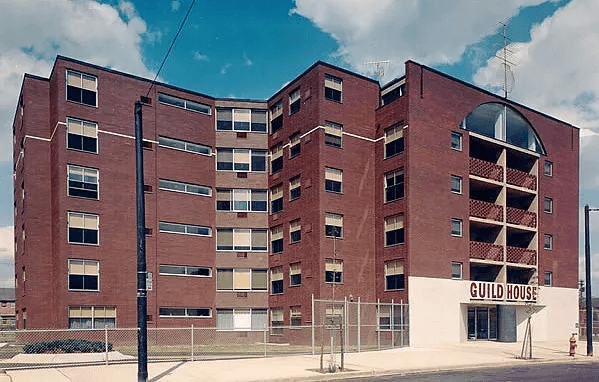
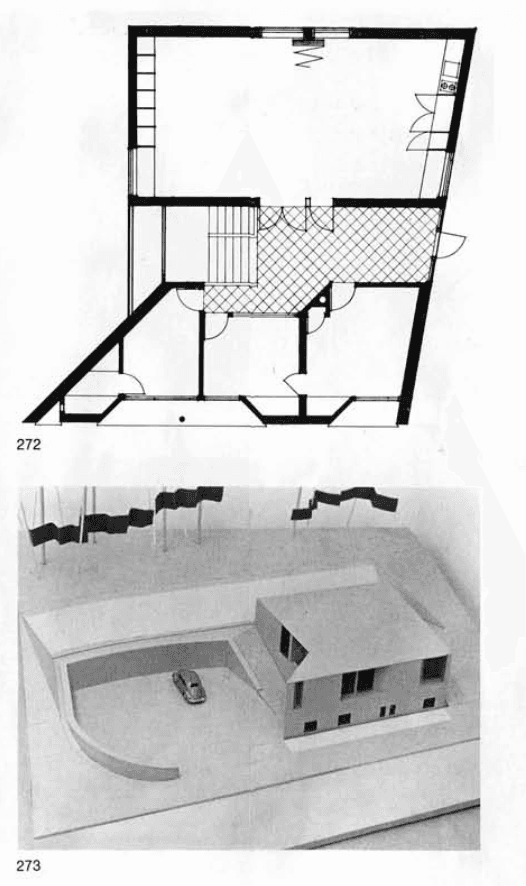
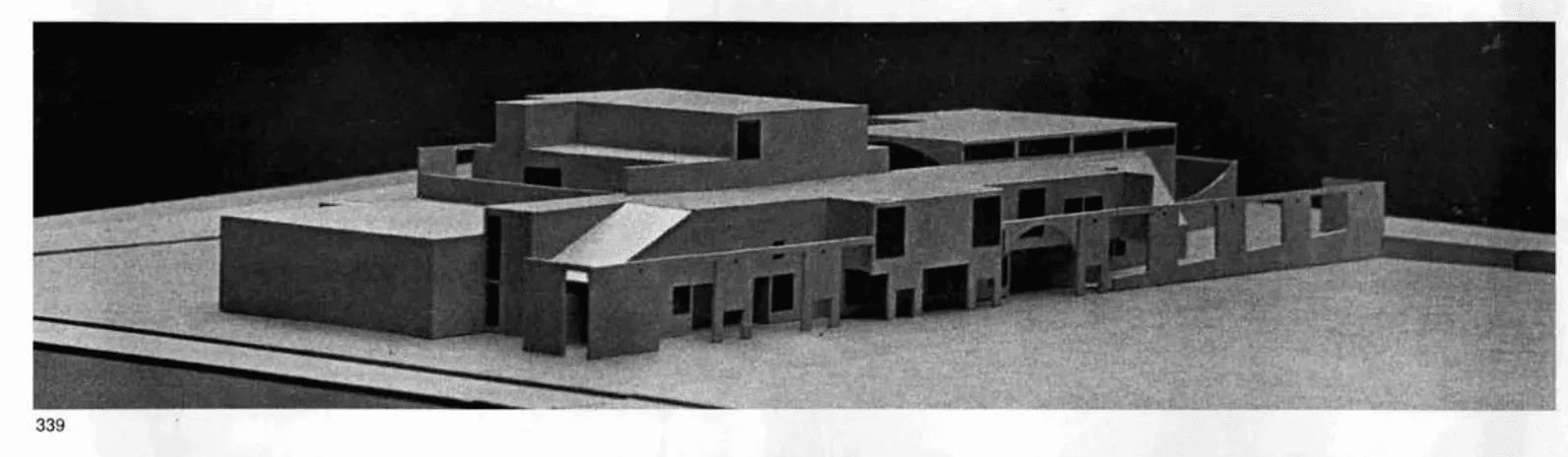
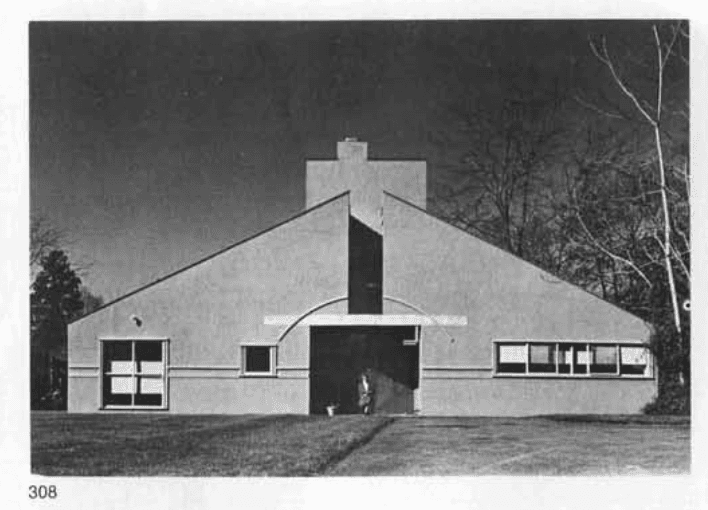
It's simultaneously busy and bland. Blocky and unadorned. More oversimplified than the modernist works he criticizes. Venturi admits that he dislikes intricate ornament, which could explain his manifested style:
The main reason for the large scale is to counterbalance the complexity. Complexity in combination with small scale in small buildings means busyness. Like the other organized complexities here, the big scale in the small building achieves tension rather than nervousness-a tension appropriate for this kind of architecture. (p 119)
The most revelatory part of the book is his discussion of several of his works. I can see how he puts his theory into practice, how he justifies each detail of his designs. One I found most interesting was a modest diner in Philadelphia. He speaks about the low budget, accommodating the irregular layout, the need for a prominent facade to attract customers. All of these influences I like, yet I hate the output.
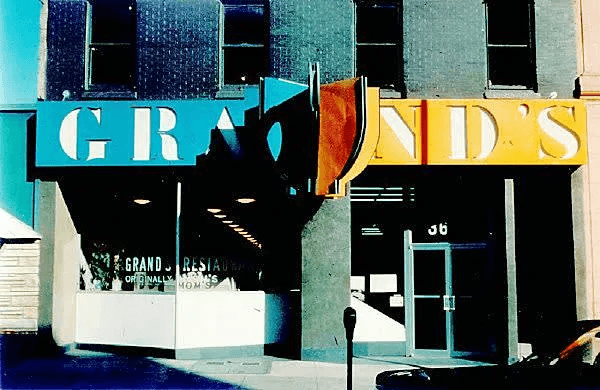
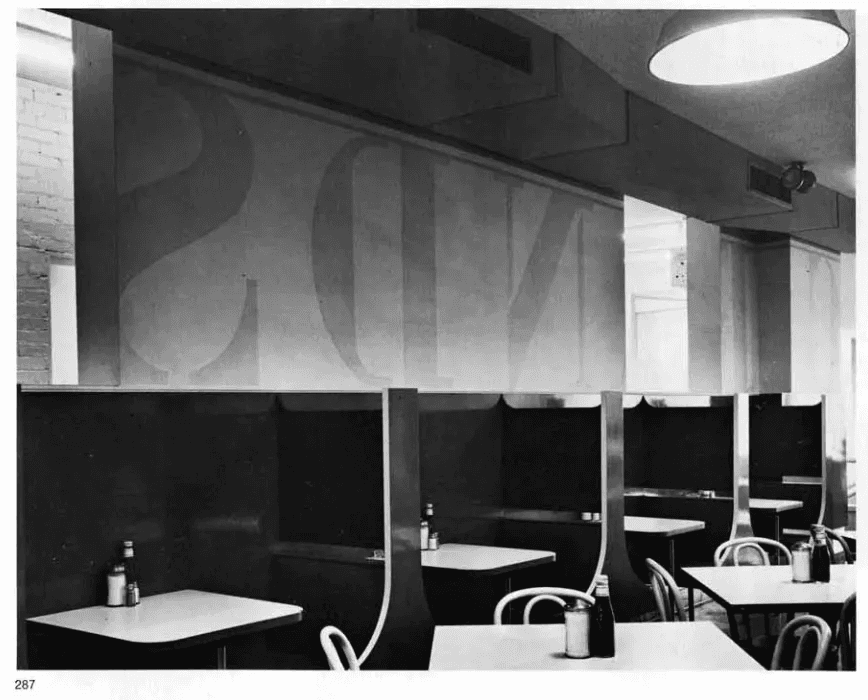
We tended to use conventional means and elements throughout but in such a way as to make the common things take on a new meaning in their new context. this was also a reaction to the typically over-designed "modern" fixtures available to day. (p 112)
The flaw with the design is not in its logic but in its emphasis on concept over creating a nice ambience. Venturi calls the project a "parody" himself. It seems he was more intent on creating a Pop-Art statement than a diner that people would like to eat at.
The industrial furniture is not transformed in its new context (as he imagines) it simply makes the interior look industrial and unwelcoming, like a hospital cafeteria. The design wallows in its economy rather than trying to elevate it.
He spends a lot of energy focusing on the signage, even going so far as to reuse it inside as ornament. The colors are bright and gaudy, just like the honky-tonk elements he loves.
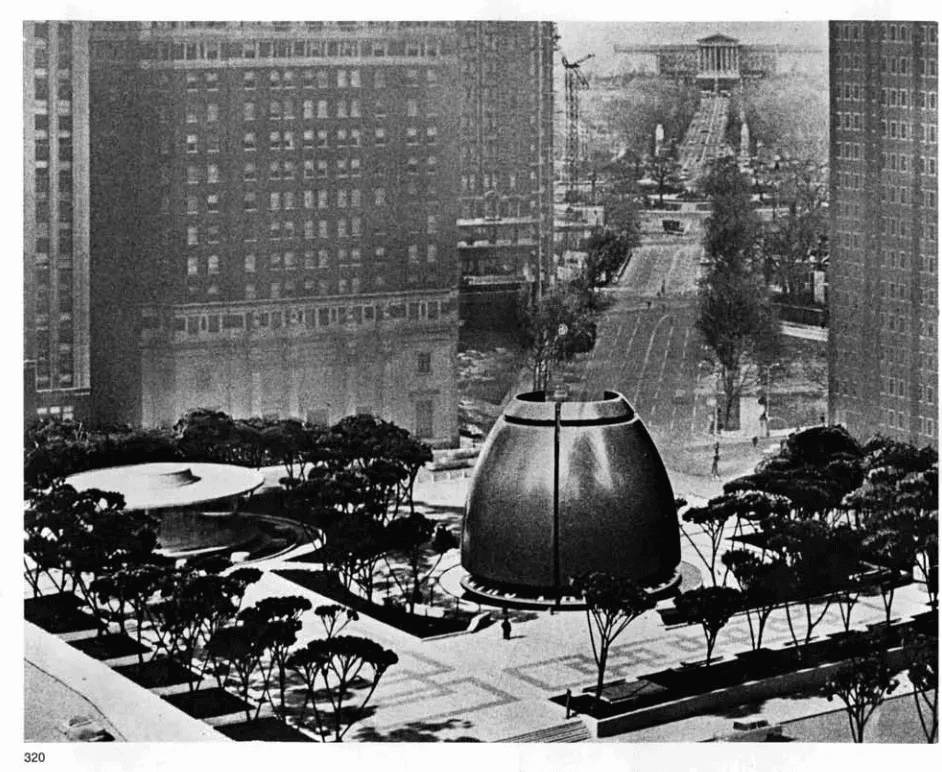
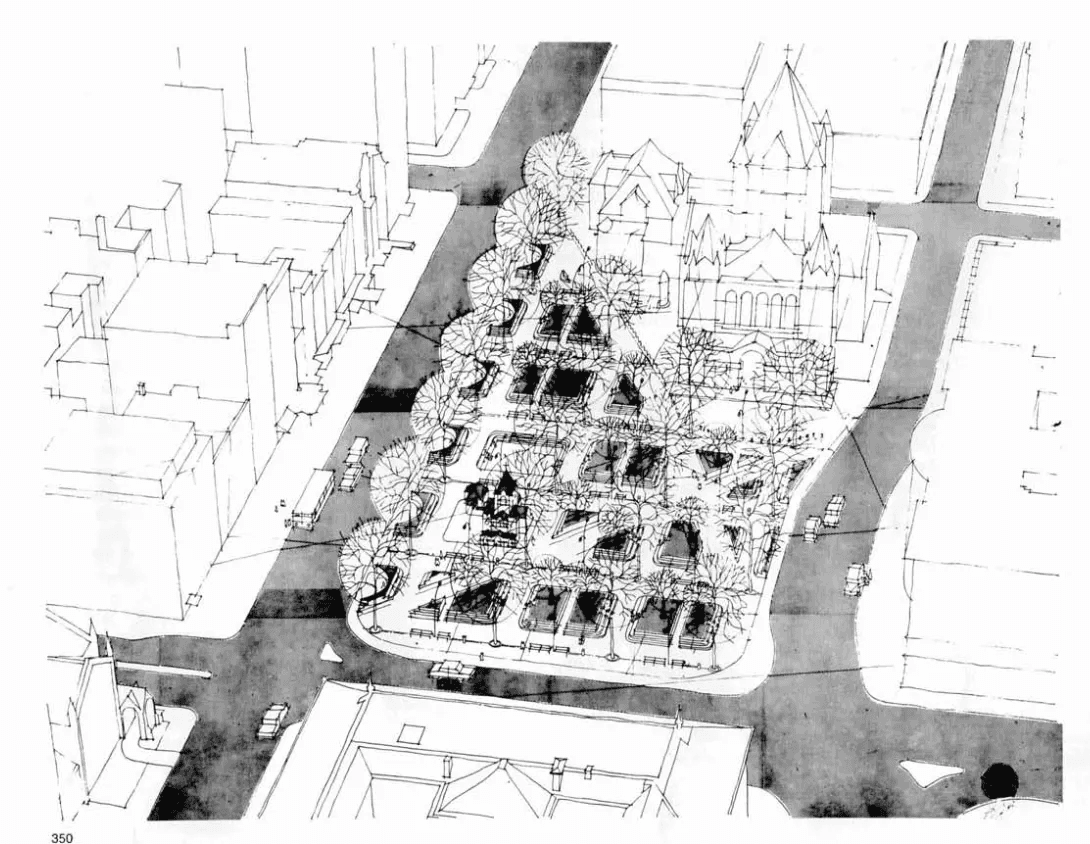
Venturi actually makes for a much better sculptor and urban designer than residential or commercial architect. In these contexts, appearances and symbolism matter more; irony and playfulness are welcomed. The grand scale of these projects seemed to bring out a discipline in his style that's missing in other works. I would have loved to run around his Fairmount Park fountain, or played in the miniature church in his Copley Square design:
The legend HERE BEGINS FAIRMOUNT PARK is glimpsed through a screen of droplets. This waterfall, with the polished, elongated letters on the sloping surface of the base behind, relates to the scale of the individual walking around the immediate plaza and is designed to engage his interest. Lettering is traditional on monuments. The legend designates the dramatic penetration of the biggest urban park in the world into the heart of the city. When the legend is read from the front elevation it appears to say PARK HERE, not inappropriately for a monument over an underground parking lot. (p 122)
Where the blocks are cut through, the cheek walls have very bold inscriptions of nursery rhymes, etc., cast into the concrete to interest children who cannot see over the blocks (p 129)
There is a reason for this little replica and that of the gridiron "streets" too-a reason other than those reasons already mentioned effecting ambiguity, tension, scale and monumentality: the miniature imitation is a means for explaining to a person the whole which he is in but cannot see all of. To reassure the individual by making the whole comprehensible in this way within a part is to contribute a sense of unity to a complex urban whole. This kind of imitation in miniature involves as well an imitation of one aspect of life. To condense experience and make it more vivid, to pretend, that is, is a characteristic of play: children play house. Adults play Monopoly. In this square it is a simulation of urban circulation and space. The little church is play sculpture for children too. (p 130)
And finally, ignoring any of the ideas in his book, I was amazed at the level of depth and breadth. It seems like Venturi had studied every single building and could write a detailed opinion on each one. And he wasn't afraid to praise good ideas from the architects he was trying to oppose. Every chapter was packed with several nuanced ideas; I had to reread them multiple times to reveal new ones that I missed.
Next Book on my list: Towards a New Architecture by Le Corbusier